

ELECTED BY STRATEGY.
How marketing shaped the American presidency.
Presidents aren’t just elected. They’re positioned.
From newspaper slogans in the 1800s to social media dominance in the 21st century, the American presidency has evolved alongside marketing itself. Every era had a different platform — but the objective stayed the same:
Capture attention. Build trust. Win perception.
Here’s how presidential campaigns became masterclasses in marketing strategy.
Before Mass Media: Word of Mouth & Newspapers
In the early 1800s, presidential candidates rarely campaigned directly. Supporters, political parties, and newspapers carried the message. Influence spread locally through print and in-person advocacy.
This was earned media before paid media.
Even then, campaigns understood something critical: Control the narrative, and you control the momentum.
Slogans & Symbolism: The Birth of Positioning
By the mid-1800s, campaigns leaned heavily into slogans and symbolism.
“Tippecanoe and Tyler Too” wasn’t just catchy — it was memorable, rhythmic, and repeatable. Campaign buttons, banners, and imagery created visual consistency long before modern brand guidelines existed.
This was the birth of positioning. Simple messaging. Strong identity. Mass recall.
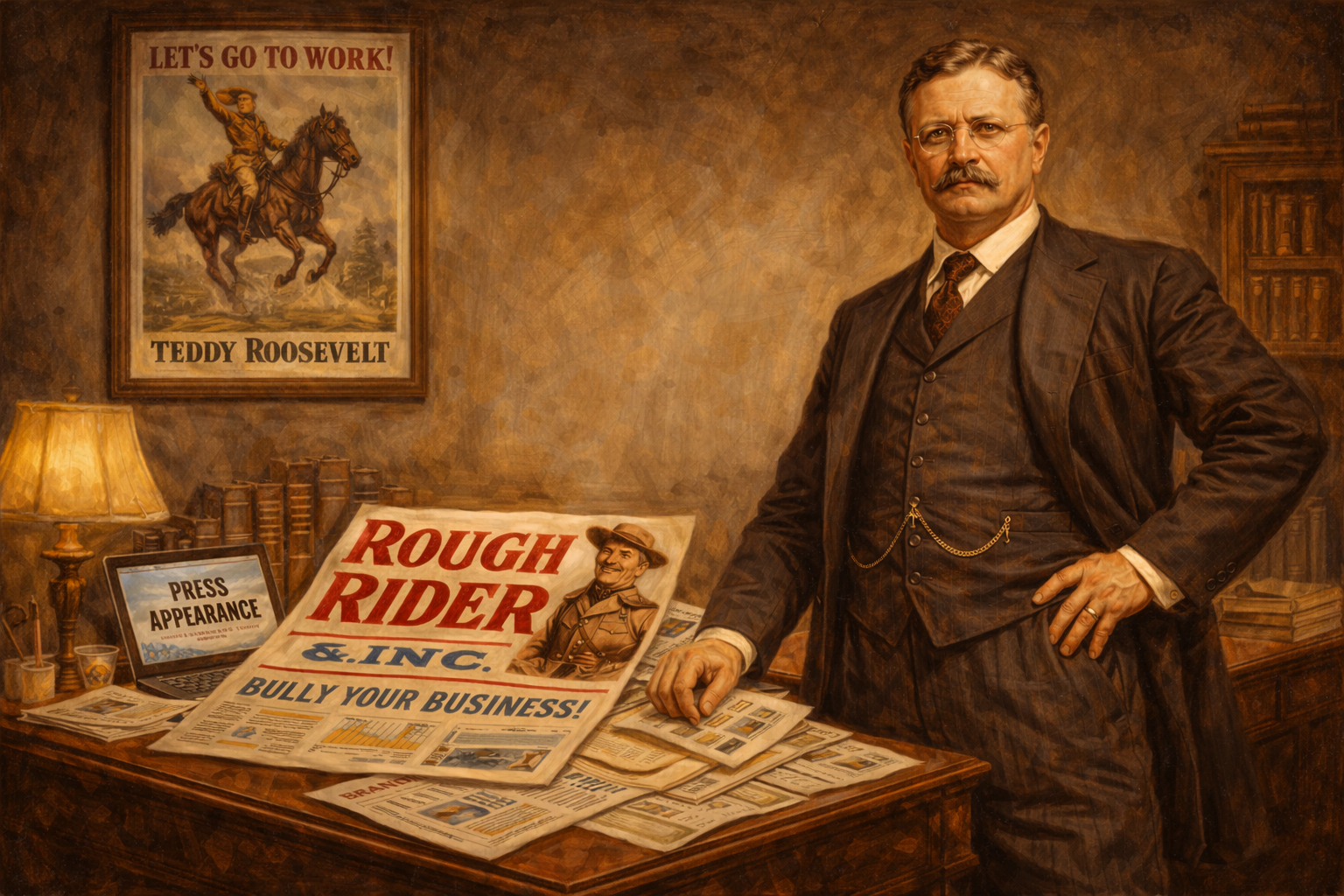
TEDDY Roosevelt: The First Modern Political Brand
Teddy Roosevelt didn’t just run for office — he built a persona.
Through newspapers, photography, and highly publicized appearances, he crafted an image of strength, masculinity, and action. The “Rough Rider” identity wasn’t accidental — it was branding.
Roosevelt understood something many businesses still miss today:
People don’t just follow policy. They follow personality.
Radio: The Power of Direct Connection
In the 1930s, Franklin D. Roosevelt transformed communication with his “Fireside Chats.”
Through radio, he spoke directly to Americans in a calm, conversational tone. No middleman. No filters. Just voice and presence.
Trust was built through intimacy.
This marked a major marketing shift: Distribution had changed — and so did the relationship with the audience.
Television: Image Became Everything
The 1960 Kennedy-Nixon debate proved that perception could outweigh substance.
Television viewers believed JFK won. Radio listeners believed Nixon did.
Why? Appearance. Confidence. Composure.
From that moment forward, campaigns understood that visual branding mattered as much as messaging. The candidate wasn’t just speaking — they were performing.
The 30-Second Political Spot
By the 1980s and 1990s, campaigns had adopted full-scale commercial advertising strategies. Emotional storytelling, cinematic production, strategic placement — politics had entered the era of brand marketing.
Campaigns became structured like corporate launches.
Attention wasn’t enough anymore. Emotional impact was the differentiator.
The Digital Era: Campaigns at Algorithm Speed
In 2008, Barack Obama’s campaign leveraged email marketing, online fundraising, and social media at scale. Data-driven targeting became central to modern campaigns.
Today, political campaigns operate like media companies — creating content daily, optimizing messaging in real time, and using social platforms to shape narrative instantly.
The candidate is no longer just the message. The candidate is the content.
What Businesses Can Learn:
The presidency may be political — but the strategy behind it is pure marketing.
Every major shift in presidential campaigning followed the same formula:
• Adapt to the dominant media platform
• Control the narrative
• Build a recognizable identity
• Communicate directly
• Own attention at scale
The tools changed. The psychology didn’t.
Whether you're running for office or scaling a brand, success comes down to positioning, distribution, and perception.
Because in every era — from print to radio to television to social media — one truth remains:
Power follows strategy.