

THE GAME BEHIND THE GAME.
How One Game Became the Biggest Marketing Day on Earth.
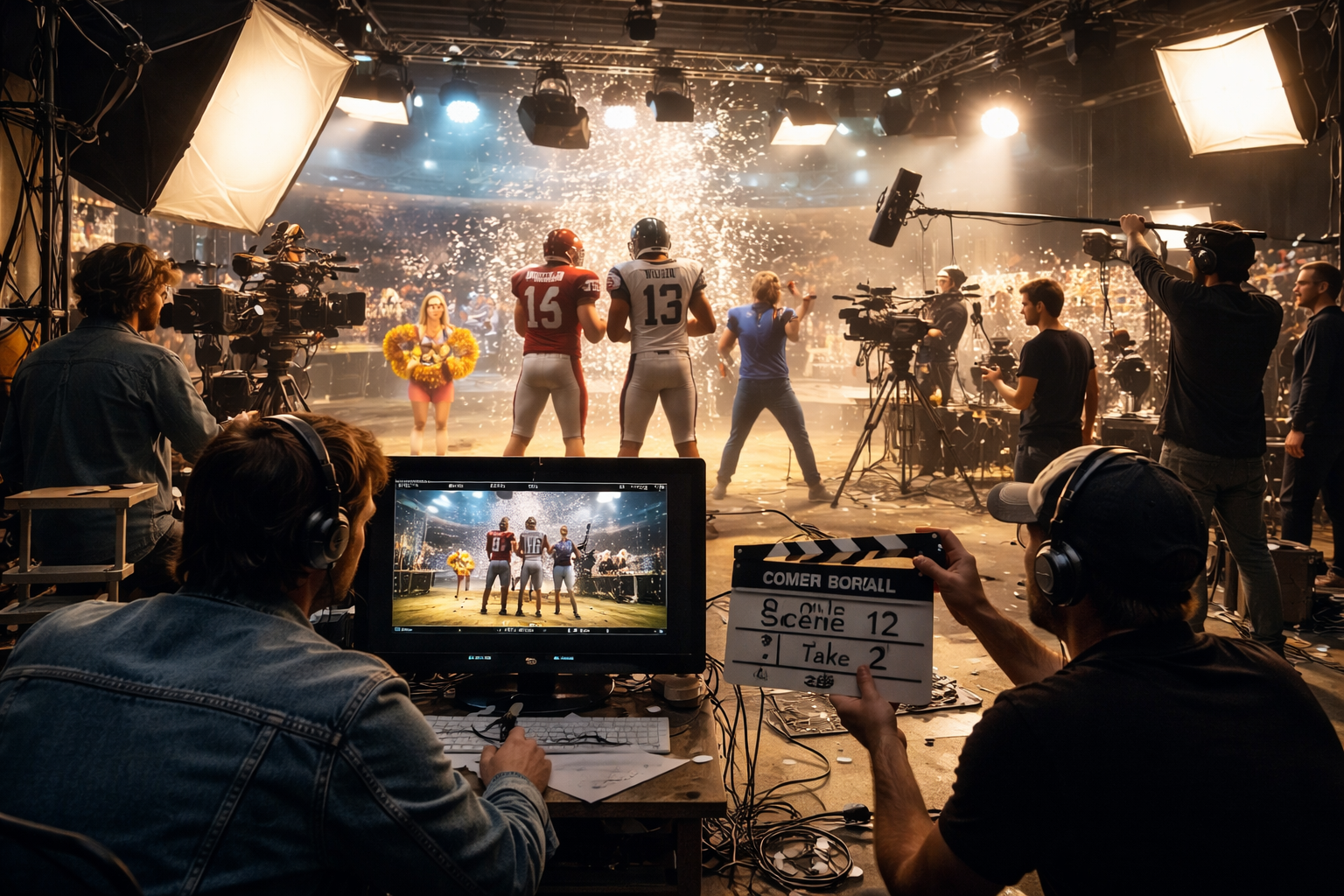
Every year, the Super Bowl delivers more than a championship game. It delivers the largest, most concentrated moment of attention in modern media — and brands know it.
But the Super Bowl didn’t start as the marketing powerhouse it is today. Its evolution mirrors the evolution of advertising itself: from simple awareness to cultural dominance.
Here’s how one football game became the most important day in marketing.
IT STARTED WITH A GAME (1967)
The first Super Bowl aired in 1967. At the time, it wasn’t even officially called “The Super Bowl,” and surprisingly, not all seats were sold.
From a marketing perspective, it was just another televised sporting event. Ads were straightforward, functional, and forgettable — designed to inform, not inspire.
No one was tuning in for the commercials. Yet.
TELEVISION CHANGED EVERYTHING
As television ownership exploded in the late 1960s through the 1970s, the Super Bowl’s audience grew year after year. What began as a game slowly became one of the most-watched broadcasts in America.
That’s when marketers realized something critical:
Scale + attention creates opportunity.
For the first time, brands could reach tens of millions of people at the same moment — live, focused, and engaged. The Super Bowl was no longer just a sports event. It was a mass-attention platform.
1984: WHEN ADVERTISING BECAME THE EVENT
Everything changed in 1984.
Apple’s now-legendary “1984” commercial didn’t just promote a product — it told a story. Cinematic. Emotional. Provocative. And most importantly, unforgettable.
That single ad proved something revolutionary: Super Bowl commercials could live far beyond the game itself.
From that moment on, ads weren’t just interruptions — they were events. Brands began competing not only for airtime, but for conversation, press, and cultural impact. Earned media and word-of-mouth became just as valuable as the media buy itself.
THE BIGGEST STAGE IN MARKETING
Today, the Super Bowl represents the most expensive ad space in the world. Brands spend millions for seconds because no other moment delivers that level of attention, all at once.
But here’s the truth: the media buy alone isn’t what makes a Super Bowl ad successful.
The real value comes from what surrounds it — the strategy, the storytelling, the rollout, and the amplification. Attention may be the currency, but relevance, recall, and conversation are the return.
IT’S NOT A COMMERCIAL. IT’S A CAMPAIGN.
Modern Super Bowl advertising doesn’t start on game day and it doesn’t end there either.
Brands now tease their spots before kickoff, activate across social during the game, and extend the message for weeks afterward. What was once a 30-second commercial is now a fully integrated, multi-platform campaign.
The Super Bowl has become the ultimate case study in modern marketing: distribution, creativity, timing, and cultural awareness working together.
THE TAKEAWAY
The Super Bowl isn’t really about football.
It’s about owning attention at scale, when the world is watching — and knowing exactly what to do with it once you have it.
That lesson doesn’t only apply to billion-dollar brands. It applies to every business competing in today’s crowded digital landscape.
Because whether it’s the Super Bowl or social media, the rules are the same: attention is earned, not guaranteed — and strategy is what turns it into impact.